
Apple Watch Series 12 vs Garmin Cirqa for one week — sleep scores compared
I've been wearing the Apple Watch Series 12 to bed every night for a week now, which means, after seven nights of calibration, I finally got the benefits of the revamped Vitals app and the new Readiness Score. The Watch has to learn your baseline metrics so it can see outliers, which is why it takes a week for the Vitals app to gauge whether your heart rate variability, respiratory rate, blood oxygen and more fall within your 'typical' range.
Readiness is the last metric, as it aggregates your sleep quality based on these parameters, compares it with your activity levels and gives you a score from 1 to 10 on how energetic and prepared-for-the-day you might be feeling.
This is the first time Apple devices have had a Readiness metric, compared to the long-serving nature of the features on the best Garmin watches, Samsung and Google wearables, and many others, so naturally, I wanted to compare it with another wearable device.
These days, I'm most often using my Garmin Cirqa for sleep tracking, so I kept wearing it on my right wrist, and the Apple Watch Series 12 on my left. Below, I've compared my sleep scores from across the week for accuracy, as well as my Readiness at the end of it all.
Sleep scores across the week
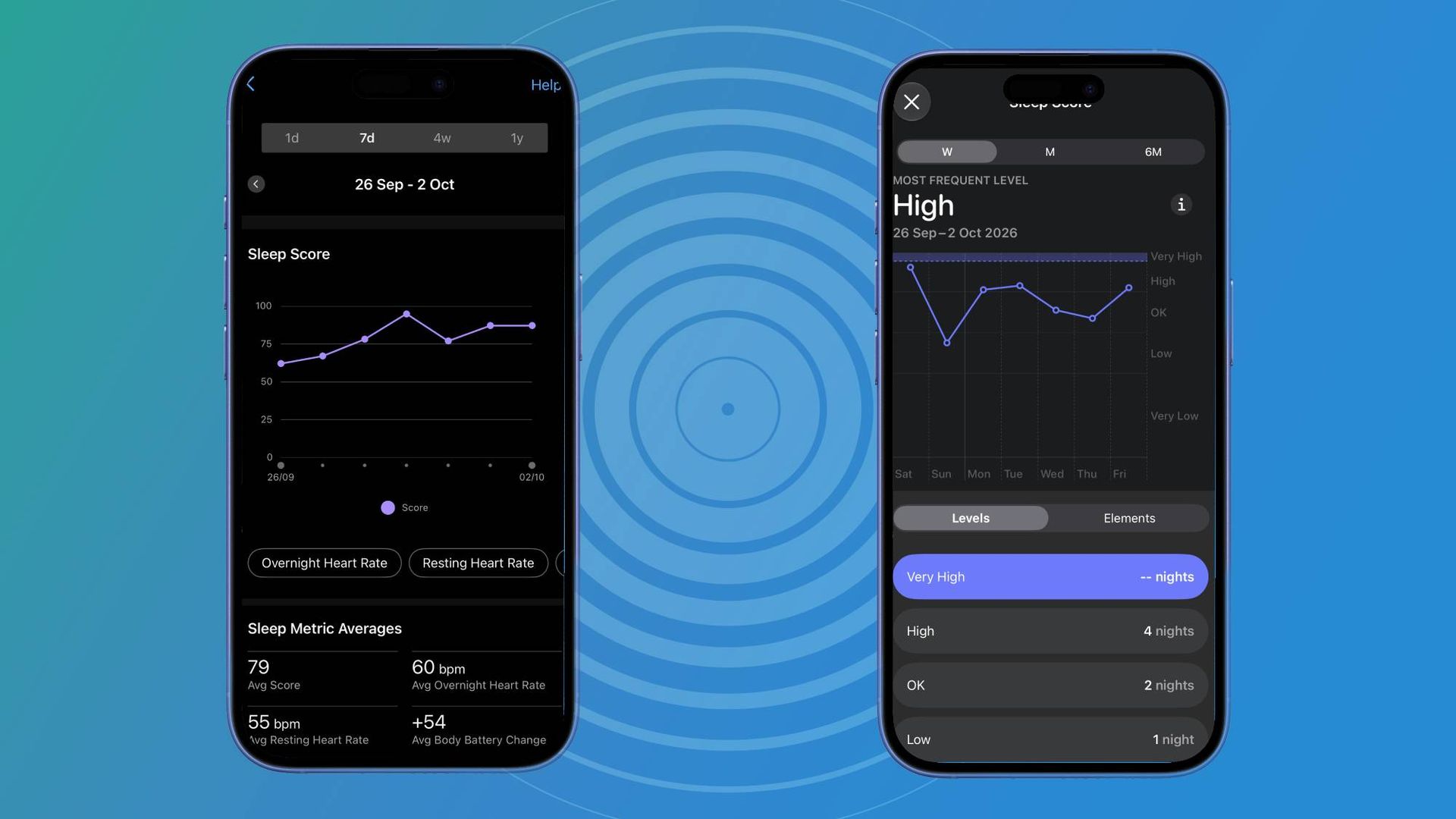
I fully expected Apple and Garmin to provide disparate scores at first, only to tighten up as the week progressed and Apple learned more about my body. Sure enough, that's exactly what happened, as Apple gave my first night a score of 93 compared to Garmin's dismal 62.
After that, you can see above that the graph follows the same general trends: a rising incline as the week progresses, with a dip in the middle, and a high final night.
The main outlier other than night 1 is night 6, for which I have no explanation. Garmin gave me a score as high as 87, while Apple gave me a mere 68. You can see the difference in the graphs above, but I've listed all my scores in the table below, too.
Date | Garmin | Apple |
26/09/2026 | 62 | 93 |
27/09/2026 | 67 | 56 |
28/09/2026 | 78 | 82 |
29/09/2026 | 95 | 84 |
30/09/2026 | 77 | 72 |
01/10/2026 | 87 | 68 |
02/10/2026 | 87 | 83 |
Perhaps there will always be these outliers here and there. Research from health data API creator Terra measured 77,000 nights' sleep across six major wearables companies, and found that while most trackers are accurate enough to converge on duration and general trends, sometimes outliers in their data exist due to the different sensors and algorithms used between manufacturers.
The study stated that "once you break sleep into stages [light, deep, REM phases of sleep], agreement [between wearables] falls apart: REM, deep, and light can diverge by hours in direct comparisons."
However, are these outliers statistically important, as long as the wearables are all charting similar trends coming to the same conclusions?
Readiness
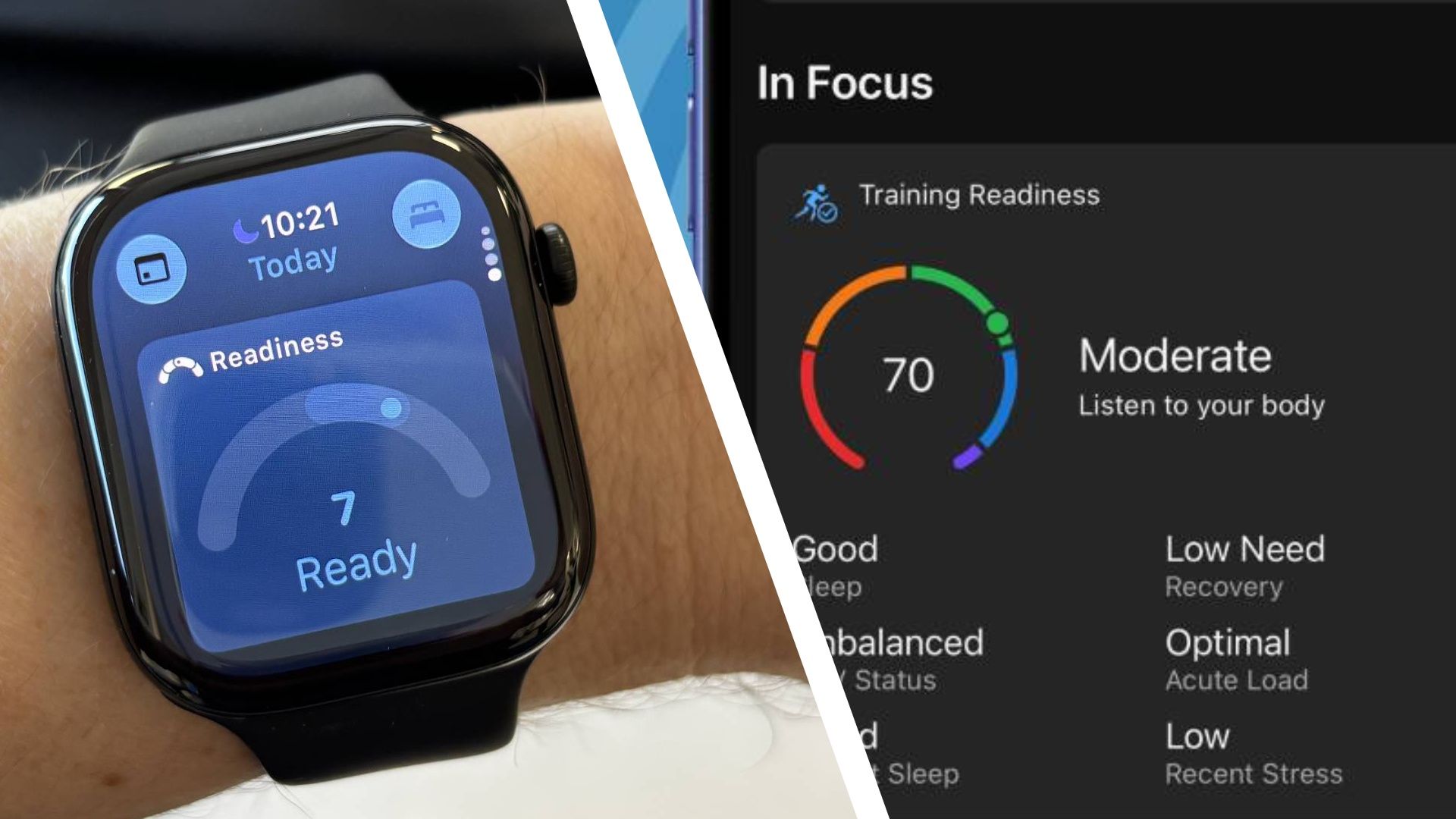
At the end of the week, I got my first Readiness score from Apple. It was a 7/10, indicating that I was 'ready' without being 100% prepared for a mammoth workout.
Checking the Garmin Connect app, I was surprised to see a Readiness score of 70/100, indicating that even though there were some outliers along the way, the wearables came to the exact same conclusion after a week of constant wear. Success!
Conclusion: Pay attention to the trends
While some discrepancies were present during the week, Garmin and Apple both came to the same conclusion on Readiness and offered a similar-shaped sleep score graph, indicating that they're internally consistent and generally quite accurate.
I'd be happy to wear either one to track my sleep, Readiness and fitness in general terms. However, the differences in individual data points are a reminder not to get too caught up into the weeds of the data: as clever as they are, these devices are imperfect, and they estimate. You can see differences in my Apple Watch Series 12 vs Garmin Fenix 9 Pro test too.
If you find yourself stressing too much over your scores or your data, or you feel differently than your watch says you ought to feel, prioritize the messages from your body over the ones from your wearable — and don't be afraid to get a night of untracked sleep now and again to free yourself from sleep score anxiety.
from Latest from TechRadar https://ift.tt/mY3hLqN
https://ift.tt/SwgeuaV
via IFTTT
No comments